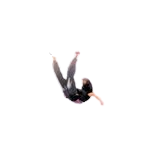
Kai Tai Chan - The Forgotten Legacy
Kai Tai Chan has made incomparably significant contributions to the development of intercultural
and interdisciplinary practice in 21st century Australian contemporary dance (Dyson & Stock, 2006). His
commitment to rejecting the Western hegemony of dance technique and creating works that resonate with
the dialectic audience of Australia was decades ahead of his time, exploring social issues that are only
beginning to be interrogated today (Lester, 2000). Despite his contributions to the development of
Australian contemporary dance, Chan remains demarcated from the Western art canon due to his
‘otherness’ both in the 20th century Australian dance community and wider Australian community
(Lester, 2000). His ‘otherness’ is established from his unconventional pathway into dance and
choreography, non-conformity to Western dance lineages, and his identity as an immigrant homosexual
artist (Lester, 2000). It is necessary to recover Chan’s contributions to Australian dance to reveal how the
bureaucracy and politics of Western artistic funding have shaped the Australian dance canon to the
exclusion of migrant voices (Lester, 2000).
Chan remains a singular and significant voice in the Australian dance zeitgeist, influencing the evolution of Australian dance identity into one defined by its hybridity and interculturalism (Dyson & Stock, 2006; Lester, 2000, p. 39). Chan became a choreographer with minimal formal training - studying and working full-time as an architect while training in Margaret Barr’s movement philosophy which explored dance-theatre as a ‘social forum’ that incites passion around contemporary social issues (Lester, 2000, p. 43; Stock, 2008). Growing up in Penang, Malaysia, Chan was exposed to dance, not as a high art, but as an innate form of human expression accessible to all people (Lester, 1998; Lester, 2000). Dance was ingrained in the spiritual and socio-cultural customs of his own Chinese heritage and that of his Indian and Malay peers including in the Hindu festival Navarātrī and Malaysian Dikir Barat (Lester, 1998; Lester, 2000). The influences of Malaysian dance culture and his studies with Margaret Barr shaped his philosophy that dance should not be limited in subject to the ‘aesthetic’ or ‘romantic’ rather, dance should be for all and represent all (Lester, 2000). His philosophy was extremely ahead of his time, driving him to hire dancers of diverse training backgrounds, age, size, race, sexuality, and culture, in a climate where Aboriginal Australians were excluded from compulsory voting, homosexual relationships were criminalised and villainised in the wake of the AIDS epidemic, and the White Australia Policy was being debated (Lester, 2000; Meaney, 1995; Australian Electoral Commission, 2020; Bowtell, 2005). Chan criticised the Western hegemony of dance technique which recognised ballet as an absolute indicator of ‘adeptness’ as a dancer and choreographer, with skill in other cultural practices deemed peripheral (Lester, 2000). Instead, Chan exposed his dancers to a wide variety of cultural influences taught by the masters of those practices including company classes that focussed not on perfecting technique, but on practices including Tibetan Massage, Yoga, Balinese dance and Chinese Medicine (Mackinnon 1987, p. 12). He frequently facilitated intercultural exchange, including organising a half year international collaboration between Balinese and Australian dancers culminating in Dancing Demons (1991) (Lester, 2000). His works centred around dissecting the question of ‘what makes us Australian?’, calling us to recognise the unity in our disparate identities through the lens of the ‘other’ (Lester, 2000). This overarching interrogation is best exemplified by his work People Like Us (1991) where he cooked his local Malaysian dish Char Kway Teow for the audience whilst remarking ‘I’m an Australian. When I go away, I miss the bush’, highlighting the inherent hybridity of ‘Australianess’ (Lester, 2000, pp. 184, 221- 222). Chan fought to define an Australian dance identity that was different from established European and American lineages through its non-tokenistic hybridity of different cultural influences (Lester, 2000).
We see the reverberations of Chan’s philosophy in the evolution of Australian contemporary dance works and education. As of the 21st century there has been increased support for the hybridisation of cultural practices with a focus on decolonising dance (Vega, 2018). This can be observed in professional dance training curricula including the Victorian College of the Arts’ (VCA) curriculum which includes cultural practices including Kathak and Wing Chun (University of Melbourne, n.d.). With the inclusion of other cultural practices, there has been a demotion of ballet from its position of absolute authority to one of relative importance as observed by VCA’s ‘ballet for contemporary dance’ classes which position ballet as peripheral to contemporary dance studies (although ballet remains prioritised over training other cultural practices) (University of Melbourne, n.d.). There has also been increased intercultural practice in the independent sphere including the hybrid Greek folk and contemporary dance-theatre of Luke Macaronas’s Infinite Affection (Sts Constantine and Helen Church Hall, 2022). This increased acceptance of intercultural practice is also evident in Australia Council for the Arts’ (formerly the Australian Elizabethan Theatre Trust) shifts in funding support, namely their expansion of their National Performing Arts Partnership framework to include Marrugeku and Artback NT where previously the only intercultural company they deemed a major national performing arts organisation was Bangarra Dance Theatre, with all other funding allocated to dance companies rooted in Western dance lineages including the Australian Ballet, Queensland Ballet, Sydney Dance Company and West Australian Ballet (Australian Council for the Arts, n.d.).
In addition to his impact on the intercultural voice of 21st century Australian contemporary dance, Chan has significantly influenced the acceptance of interdisciplinary collaboration in Australian contemporary dance practice. Influenced by his background in architecture and the notion of complementarity in Confucianist philosophy, Chan rejected the need to preserve dance’s ‘purity’, rather, regarding dance as a mode of communication alongside other art forms including theatre, music performance, literature, and architecture (Lester, 2000). For example: in The Shrew (1986) he integrated dialogue, instrument playing and acapella singing to explore the oppression of women, in People Like Us (1991) he integrated live cooking to explore food as a core component of his Malaysian-Chinese heritage and in Midday Moon (Performance Space, 1984) he designed an immersive set that included use of Eucalyptus scent, water that splashed the audience and live set construction to explore the Australian connection to landscape (Lester, 2000). Chan stated that he wanted audiences to see One Extra’s work not for his dance-theatre ‘style’, but for the issues they were exploring, reflective of Barr’s notion of dance as a catalyst for involvement in social issues (Lester, 2000, p. 140). To achieve this goal, he broke down barriers between disciplines, subverting the ‘rules’ of dance to shape his form around the needs of his content, creating performances that had no clear through line in style (Lester, 2000; Pollack, 1984). Chan’s influence on the prevalence of interdisciplinarity in 21st century Australian contemporary dance is evident in both educational and professional spheres. In education, there has been an extension of dance training regimes to include proficiency in collaboration with science, design and music disciplines, exemplified by Victorian College of the Arts’ inclusion of Digital Dance and Interdisciplinary Project subjects in their curriculum and a broader encouragement of interdisciplinary practice through the staging of works such as Amrita Hepi’s Here we have it (Space 28, 2021) in the VCA graduate season which combined the use of voice with movement (University of Melbourne, n.d.; University of Melbourne, 2021). In the professional sphere there has been increased interdisciplinary collaboration by dance companies including Chunky Move’s collaboration with video artist Kris Moyes and designer Callum Morton for Yung Lung (2021) and Australian Dance Theatre’s collaboration with Canadian multidisciplinary artist Louis-Philippe Demers and UK video artist Gina Czarnecki for Devolution (2006) which integrated robotic prostheses into the work exploring the relationship between machine and body (Chunky Move, 2021; Australian Dance Theatre, n.d.).
Despite his widespread and significant contribution to Australian dance, Kai Tai Chan remains excluded from the Western art canon - a reality exemplified by the loss of Australian Council funding and subsequent dissolution of One Extra Company in 2006 (Lester, 2000; Trove, n.d.). His exclusion can be credited to his ‘otherness’ both in the Australian dance community and wider Australian community. Within the wider Australian community, Chan was seen as an ‘other’ due to his identity as a Malaysian-Chinese immigrant and homosexual resulting in the attribution of reductionist stereotypes to his practice which undervalued his contribution to Australian dance history, resulting in his exclusion from the Western art canon (Lester, 2000, pp. 118, 181, 206, 212). Chan’s tenure as a choreographer coincided with the sinophobic rhetoric of the 1901 ‘White Australia’ Policy which established that Australia should preserve ‘the British tradition of freedom and equality under the law’ by forcing immigrants to assimilate into Australian culture by renouncing their cultural traditions (Meaney, 1995). As Chan’s works often explored and criticised notions of Australian identity, his treatment as an ‘other’ inhibited his works from being valued in the Western art canon as British-Australians did not believe that Chan could understand true Australian values and culture thus, invalidating his explorations of national identity (Lester, 2000, pp. 206, 212). During his time with One Extra Company, Chan was constantly reduced to being simply an ‘ethnic’ or ‘gay’ artist due to his explorations of LGBTQ+ and immigrant themes in his works rather than being appreciated for his choreographic merit, resulting in his uncredited contributions to Australian dance innovation (Lester, 2000).
The Australian dance canon is shaped by the allocation of public endowment to support the work of artists (Lester, 2000). Chan’s unconventional pathway to choreography, deviation from Western dance lineages in his practice, and dismantling of boundaries between artistic disciplines established him as an ‘other’ within the dance community which impacted the funding of his practice, resulting in his exclusion from the Australian dance canon. Chan originally studied to become an architect, training in Margaret Barr’s movement philosophy outside of classes (Stock, 2008; Lester, 1998). Throughout Chan’s early career, he balanced a full-time job in architecture along with his choreographic practice and dance training which mirrored the careers of his company members who also came from unconventional pathways and balanced other established careers outside of dance (Lester, 1999, p. 49). Preserving his full-time career outside of dance reduced his credibility as an artist in the eyes of Western dance artist contemporaries as it contradicted the Western romanticisation of the ‘starving’ artist who was fully devoted to their artform regardless of monetary gain (Lester, 2000, p. 83). In addition, Chan trained in ballet later than deemed ‘acceptable’ for professional dance practitioners, training in ballet and Graham technique in his 20s (Lester, 1999). This impacted the value and credibility of his practice to other dance practitioners, particularly those of funding bodies, who doubted Chan’s competence as a dancer and choreographer due to his unconventional training (Lester, 2000, pp. 71-72).
In addition, by positioning ballet as a peripheral rather than central influence on his practice compared to Margaret Barr’s philosophy and his own experiences of folk dance in Malaysia, Chan isolated his work from the established value frameworks of Australian funding bodies which were based on American and European modern dance lineages (Lester, 2000, pp. 71-72, 120). This separation from Western dance lineages resulted in the diminishment of his work’s value by Western artists who struggled with finding a value framework in which to view and evaluate his work (Lester, 2000). Funding bodies also struggled with categorising Chan’s work due to its interdisciplinary nature, with no funding category dedicated to interdisciplinary practice until 1994-95 (Lester, 2000, pp. 211-212; Throsby, 2000). His breaking of discipline boundaries contradicted the Western art canon’s value of ‘artistic purity’ and was not viewed as credible innovation due to the formerly explored reasons of his identity as a Malaysian-Chinese homosexual immigrant and his lack of classical training (Hines, 1991, p.124; Lester, 2000, pp. 211-212). This is evidenced by the appreciation for and funding of the Australian Ballet’s The Competition by Maurice Bejart, which was praised for its interdisciplinary weaving of magic tricks and cinematic techniques into ballet, despite Chan making the same advancements decades earlier with no recognition by funding bodies or the artistic community (Shoubridge, 1989, 5 December). The exclusion of Chan from the Western art canon is epitomised by the loss of Australian council funding for One Extra Company in 1990 with the cited reasons of sub-standard innovation and artistic performance (Mosman Daily, 1989).
Kai Tai Chan has made numerous significant contributions to Australian contemporary dance including pioneering intercultural dance practices and popularising hybrid-arts and interdisciplinary collaboration. We can clearly observe his influence through the shifts in government funding to include intercultural performing arts companies, in dance training curricula which have shifted towards a hybrid, intercultural approach to Australian contemporary dance, and in independent and company dance works of the 21st century. Despite his contributions, Kai Tai Chan remains excluded from the Western art canon due to his ‘otherness’ in the Australian dance community and wider community, this exclusion is epitomised by the dissolution of One Extra Company in 2006. The recovery of his contributions forces us to reflect on how Western models of funding and training have inhibited the innovative voices of marginalised groups from developing - Kai Tai Chan is only one example of the many minority artists who have shaped the Australian dance identity to the exclusion of the Western art canon.
Reference List:
Australian Council for the Arts. (n.d.). National Performing Arts Partnership Framework (Partnership Framework). Retrieved June 9, 2022, from https://australiacouncil.gov.au/investment-anddevelopment/multi-year-investment/national-performing-arts-partnership-framework/
Australian Dance Theatre. (n.d.). Devolution. https://adt.org.au/works/devolution/ Australian Electoral Commission. (2020, November 12). Electoral milestones for Indigenous Australians. https://www.aec.gov.au/indigenous/milestones.htm
Bowtell, W. (2005). Australia’s Response to HIV/AIDS 1982-2005 (1). Lowy Institute for International Policy. https://archive.lowyinstitute.org/sites/default/files/pubfiles/Bowtell%2C_Australia%27s_ Response_to_HIV_AIDS_logo_1.pdf
Chunky Move. (2021). Yung Lung. https://chunkymove.com/works/yung-lung/
Dyson, J., & Stock, C. (2006). Looking out from downunder—Australian dance today. Ausdance. https://ausdance.org.au/articles/details/looking-out-from-downunderaustralian-dancetoday
Hines, T. J. (1991). Collaborative form: Studies in the relations of the arts. Kent State University Press.
Lester, G. (1989). Kai Tai Chan: part one, fingers dancing in the dark. Brolga, 8, 6-17.
Lester, G. (1999). Kai Tai Chan: part two, the London Years. Brolga, 10, 46-55.
Lester, G. (2000). Kai Tai Chan: A different path [Unpublished doctoral dissertation]. Deakin University.
Mackinnon, S. (1987). Decision time for One Extra. Dance Australia.
Meaney, N. (1995). The end of ‘white Australia’ and Australia's changing perceptions of Asia, 1945– 1990. Australian Journal of International Affairs, 49(2), 171- 189. https://doi.org/10.1080/10357719508445155
Mosman Daily. (1989). Dance group struck from grants list. Mosman Daily.
Pollack, A. (1984). Kai Tai Chan. Sydney Morning Herald. Shoubridge, W. (1989). Everyone's a loser in Bejart’s banal ballet. The Australian.
Stock, C. (2008). Different inflections - Intercultural dance in Australia. The Korean Journal of Dance, 57. http://eprints.qut.edu.au/18843/
Throsby, D. (2000). Public funding of the arts in Australia - 1900 to 2000. Australian Bureau of Statistics. https://www.abs.gov.au/Ausstats/abs@.nsf/0/ed192b5a87e90dbeca2569de0025c1a6? OpenDocument Trove. (n.d.). One Extra Dance (1978-2006). https://trove.nla.gov.au/people/726053
University of Melbourne. (2021). Here we have it. https://finearts-music.unimelb.edu.au/showcase/herewe-have-it
University of Melbourne. (n.d.). Bachelor of Fine Arts (Dance). https://study.unimelb.edu.au/find/courses/undergraduate/bachelor-of-fine-artsdance/what-will-i-study/
Vega, P. C. (2018, November 1). The 2017 Venice Biennale and the Colonial Other. Third Text. https://thirdtext.org/vega-2017-venice-biennale
Chan remains a singular and significant voice in the Australian dance zeitgeist, influencing the evolution of Australian dance identity into one defined by its hybridity and interculturalism (Dyson & Stock, 2006; Lester, 2000, p. 39). Chan became a choreographer with minimal formal training - studying and working full-time as an architect while training in Margaret Barr’s movement philosophy which explored dance-theatre as a ‘social forum’ that incites passion around contemporary social issues (Lester, 2000, p. 43; Stock, 2008). Growing up in Penang, Malaysia, Chan was exposed to dance, not as a high art, but as an innate form of human expression accessible to all people (Lester, 1998; Lester, 2000). Dance was ingrained in the spiritual and socio-cultural customs of his own Chinese heritage and that of his Indian and Malay peers including in the Hindu festival Navarātrī and Malaysian Dikir Barat (Lester, 1998; Lester, 2000). The influences of Malaysian dance culture and his studies with Margaret Barr shaped his philosophy that dance should not be limited in subject to the ‘aesthetic’ or ‘romantic’ rather, dance should be for all and represent all (Lester, 2000). His philosophy was extremely ahead of his time, driving him to hire dancers of diverse training backgrounds, age, size, race, sexuality, and culture, in a climate where Aboriginal Australians were excluded from compulsory voting, homosexual relationships were criminalised and villainised in the wake of the AIDS epidemic, and the White Australia Policy was being debated (Lester, 2000; Meaney, 1995; Australian Electoral Commission, 2020; Bowtell, 2005). Chan criticised the Western hegemony of dance technique which recognised ballet as an absolute indicator of ‘adeptness’ as a dancer and choreographer, with skill in other cultural practices deemed peripheral (Lester, 2000). Instead, Chan exposed his dancers to a wide variety of cultural influences taught by the masters of those practices including company classes that focussed not on perfecting technique, but on practices including Tibetan Massage, Yoga, Balinese dance and Chinese Medicine (Mackinnon 1987, p. 12). He frequently facilitated intercultural exchange, including organising a half year international collaboration between Balinese and Australian dancers culminating in Dancing Demons (1991) (Lester, 2000). His works centred around dissecting the question of ‘what makes us Australian?’, calling us to recognise the unity in our disparate identities through the lens of the ‘other’ (Lester, 2000). This overarching interrogation is best exemplified by his work People Like Us (1991) where he cooked his local Malaysian dish Char Kway Teow for the audience whilst remarking ‘I’m an Australian. When I go away, I miss the bush’, highlighting the inherent hybridity of ‘Australianess’ (Lester, 2000, pp. 184, 221- 222). Chan fought to define an Australian dance identity that was different from established European and American lineages through its non-tokenistic hybridity of different cultural influences (Lester, 2000).
We see the reverberations of Chan’s philosophy in the evolution of Australian contemporary dance works and education. As of the 21st century there has been increased support for the hybridisation of cultural practices with a focus on decolonising dance (Vega, 2018). This can be observed in professional dance training curricula including the Victorian College of the Arts’ (VCA) curriculum which includes cultural practices including Kathak and Wing Chun (University of Melbourne, n.d.). With the inclusion of other cultural practices, there has been a demotion of ballet from its position of absolute authority to one of relative importance as observed by VCA’s ‘ballet for contemporary dance’ classes which position ballet as peripheral to contemporary dance studies (although ballet remains prioritised over training other cultural practices) (University of Melbourne, n.d.). There has also been increased intercultural practice in the independent sphere including the hybrid Greek folk and contemporary dance-theatre of Luke Macaronas’s Infinite Affection (Sts Constantine and Helen Church Hall, 2022). This increased acceptance of intercultural practice is also evident in Australia Council for the Arts’ (formerly the Australian Elizabethan Theatre Trust) shifts in funding support, namely their expansion of their National Performing Arts Partnership framework to include Marrugeku and Artback NT where previously the only intercultural company they deemed a major national performing arts organisation was Bangarra Dance Theatre, with all other funding allocated to dance companies rooted in Western dance lineages including the Australian Ballet, Queensland Ballet, Sydney Dance Company and West Australian Ballet (Australian Council for the Arts, n.d.).
In addition to his impact on the intercultural voice of 21st century Australian contemporary dance, Chan has significantly influenced the acceptance of interdisciplinary collaboration in Australian contemporary dance practice. Influenced by his background in architecture and the notion of complementarity in Confucianist philosophy, Chan rejected the need to preserve dance’s ‘purity’, rather, regarding dance as a mode of communication alongside other art forms including theatre, music performance, literature, and architecture (Lester, 2000). For example: in The Shrew (1986) he integrated dialogue, instrument playing and acapella singing to explore the oppression of women, in People Like Us (1991) he integrated live cooking to explore food as a core component of his Malaysian-Chinese heritage and in Midday Moon (Performance Space, 1984) he designed an immersive set that included use of Eucalyptus scent, water that splashed the audience and live set construction to explore the Australian connection to landscape (Lester, 2000). Chan stated that he wanted audiences to see One Extra’s work not for his dance-theatre ‘style’, but for the issues they were exploring, reflective of Barr’s notion of dance as a catalyst for involvement in social issues (Lester, 2000, p. 140). To achieve this goal, he broke down barriers between disciplines, subverting the ‘rules’ of dance to shape his form around the needs of his content, creating performances that had no clear through line in style (Lester, 2000; Pollack, 1984). Chan’s influence on the prevalence of interdisciplinarity in 21st century Australian contemporary dance is evident in both educational and professional spheres. In education, there has been an extension of dance training regimes to include proficiency in collaboration with science, design and music disciplines, exemplified by Victorian College of the Arts’ inclusion of Digital Dance and Interdisciplinary Project subjects in their curriculum and a broader encouragement of interdisciplinary practice through the staging of works such as Amrita Hepi’s Here we have it (Space 28, 2021) in the VCA graduate season which combined the use of voice with movement (University of Melbourne, n.d.; University of Melbourne, 2021). In the professional sphere there has been increased interdisciplinary collaboration by dance companies including Chunky Move’s collaboration with video artist Kris Moyes and designer Callum Morton for Yung Lung (2021) and Australian Dance Theatre’s collaboration with Canadian multidisciplinary artist Louis-Philippe Demers and UK video artist Gina Czarnecki for Devolution (2006) which integrated robotic prostheses into the work exploring the relationship between machine and body (Chunky Move, 2021; Australian Dance Theatre, n.d.).
Despite his widespread and significant contribution to Australian dance, Kai Tai Chan remains excluded from the Western art canon - a reality exemplified by the loss of Australian Council funding and subsequent dissolution of One Extra Company in 2006 (Lester, 2000; Trove, n.d.). His exclusion can be credited to his ‘otherness’ both in the Australian dance community and wider Australian community. Within the wider Australian community, Chan was seen as an ‘other’ due to his identity as a Malaysian-Chinese immigrant and homosexual resulting in the attribution of reductionist stereotypes to his practice which undervalued his contribution to Australian dance history, resulting in his exclusion from the Western art canon (Lester, 2000, pp. 118, 181, 206, 212). Chan’s tenure as a choreographer coincided with the sinophobic rhetoric of the 1901 ‘White Australia’ Policy which established that Australia should preserve ‘the British tradition of freedom and equality under the law’ by forcing immigrants to assimilate into Australian culture by renouncing their cultural traditions (Meaney, 1995). As Chan’s works often explored and criticised notions of Australian identity, his treatment as an ‘other’ inhibited his works from being valued in the Western art canon as British-Australians did not believe that Chan could understand true Australian values and culture thus, invalidating his explorations of national identity (Lester, 2000, pp. 206, 212). During his time with One Extra Company, Chan was constantly reduced to being simply an ‘ethnic’ or ‘gay’ artist due to his explorations of LGBTQ+ and immigrant themes in his works rather than being appreciated for his choreographic merit, resulting in his uncredited contributions to Australian dance innovation (Lester, 2000).
The Australian dance canon is shaped by the allocation of public endowment to support the work of artists (Lester, 2000). Chan’s unconventional pathway to choreography, deviation from Western dance lineages in his practice, and dismantling of boundaries between artistic disciplines established him as an ‘other’ within the dance community which impacted the funding of his practice, resulting in his exclusion from the Australian dance canon. Chan originally studied to become an architect, training in Margaret Barr’s movement philosophy outside of classes (Stock, 2008; Lester, 1998). Throughout Chan’s early career, he balanced a full-time job in architecture along with his choreographic practice and dance training which mirrored the careers of his company members who also came from unconventional pathways and balanced other established careers outside of dance (Lester, 1999, p. 49). Preserving his full-time career outside of dance reduced his credibility as an artist in the eyes of Western dance artist contemporaries as it contradicted the Western romanticisation of the ‘starving’ artist who was fully devoted to their artform regardless of monetary gain (Lester, 2000, p. 83). In addition, Chan trained in ballet later than deemed ‘acceptable’ for professional dance practitioners, training in ballet and Graham technique in his 20s (Lester, 1999). This impacted the value and credibility of his practice to other dance practitioners, particularly those of funding bodies, who doubted Chan’s competence as a dancer and choreographer due to his unconventional training (Lester, 2000, pp. 71-72).
In addition, by positioning ballet as a peripheral rather than central influence on his practice compared to Margaret Barr’s philosophy and his own experiences of folk dance in Malaysia, Chan isolated his work from the established value frameworks of Australian funding bodies which were based on American and European modern dance lineages (Lester, 2000, pp. 71-72, 120). This separation from Western dance lineages resulted in the diminishment of his work’s value by Western artists who struggled with finding a value framework in which to view and evaluate his work (Lester, 2000). Funding bodies also struggled with categorising Chan’s work due to its interdisciplinary nature, with no funding category dedicated to interdisciplinary practice until 1994-95 (Lester, 2000, pp. 211-212; Throsby, 2000). His breaking of discipline boundaries contradicted the Western art canon’s value of ‘artistic purity’ and was not viewed as credible innovation due to the formerly explored reasons of his identity as a Malaysian-Chinese homosexual immigrant and his lack of classical training (Hines, 1991, p.124; Lester, 2000, pp. 211-212). This is evidenced by the appreciation for and funding of the Australian Ballet’s The Competition by Maurice Bejart, which was praised for its interdisciplinary weaving of magic tricks and cinematic techniques into ballet, despite Chan making the same advancements decades earlier with no recognition by funding bodies or the artistic community (Shoubridge, 1989, 5 December). The exclusion of Chan from the Western art canon is epitomised by the loss of Australian council funding for One Extra Company in 1990 with the cited reasons of sub-standard innovation and artistic performance (Mosman Daily, 1989).
Kai Tai Chan has made numerous significant contributions to Australian contemporary dance including pioneering intercultural dance practices and popularising hybrid-arts and interdisciplinary collaboration. We can clearly observe his influence through the shifts in government funding to include intercultural performing arts companies, in dance training curricula which have shifted towards a hybrid, intercultural approach to Australian contemporary dance, and in independent and company dance works of the 21st century. Despite his contributions, Kai Tai Chan remains excluded from the Western art canon due to his ‘otherness’ in the Australian dance community and wider community, this exclusion is epitomised by the dissolution of One Extra Company in 2006. The recovery of his contributions forces us to reflect on how Western models of funding and training have inhibited the innovative voices of marginalised groups from developing - Kai Tai Chan is only one example of the many minority artists who have shaped the Australian dance identity to the exclusion of the Western art canon.
Reference List:
Australian Council for the Arts. (n.d.). National Performing Arts Partnership Framework (Partnership Framework). Retrieved June 9, 2022, from https://australiacouncil.gov.au/investment-anddevelopment/multi-year-investment/national-performing-arts-partnership-framework/
Australian Dance Theatre. (n.d.). Devolution. https://adt.org.au/works/devolution/ Australian Electoral Commission. (2020, November 12). Electoral milestones for Indigenous Australians. https://www.aec.gov.au/indigenous/milestones.htm
Bowtell, W. (2005). Australia’s Response to HIV/AIDS 1982-2005 (1). Lowy Institute for International Policy. https://archive.lowyinstitute.org/sites/default/files/pubfiles/Bowtell%2C_Australia%27s_ Response_to_HIV_AIDS_logo_1.pdf
Chunky Move. (2021). Yung Lung. https://chunkymove.com/works/yung-lung/
Dyson, J., & Stock, C. (2006). Looking out from downunder—Australian dance today. Ausdance. https://ausdance.org.au/articles/details/looking-out-from-downunderaustralian-dancetoday
Hines, T. J. (1991). Collaborative form: Studies in the relations of the arts. Kent State University Press.
Lester, G. (1989). Kai Tai Chan: part one, fingers dancing in the dark. Brolga, 8, 6-17.
Lester, G. (1999). Kai Tai Chan: part two, the London Years. Brolga, 10, 46-55.
Lester, G. (2000). Kai Tai Chan: A different path [Unpublished doctoral dissertation]. Deakin University.
Mackinnon, S. (1987). Decision time for One Extra. Dance Australia.
Meaney, N. (1995). The end of ‘white Australia’ and Australia's changing perceptions of Asia, 1945– 1990. Australian Journal of International Affairs, 49(2), 171- 189. https://doi.org/10.1080/10357719508445155
Mosman Daily. (1989). Dance group struck from grants list. Mosman Daily.
Pollack, A. (1984). Kai Tai Chan. Sydney Morning Herald. Shoubridge, W. (1989). Everyone's a loser in Bejart’s banal ballet. The Australian.
Stock, C. (2008). Different inflections - Intercultural dance in Australia. The Korean Journal of Dance, 57. http://eprints.qut.edu.au/18843/
Throsby, D. (2000). Public funding of the arts in Australia - 1900 to 2000. Australian Bureau of Statistics. https://www.abs.gov.au/Ausstats/abs@.nsf/0/ed192b5a87e90dbeca2569de0025c1a6? OpenDocument Trove. (n.d.). One Extra Dance (1978-2006). https://trove.nla.gov.au/people/726053
University of Melbourne. (2021). Here we have it. https://finearts-music.unimelb.edu.au/showcase/herewe-have-it
University of Melbourne. (n.d.). Bachelor of Fine Arts (Dance). https://study.unimelb.edu.au/find/courses/undergraduate/bachelor-of-fine-artsdance/what-will-i-study/
Vega, P. C. (2018, November 1). The 2017 Venice Biennale and the Colonial Other. Third Text. https://thirdtext.org/vega-2017-venice-biennale